How Hypsen works underneath
Four technical decisions and five methodological frameworks explain why Hypsen can do something a video course can't.
How Hypsen's Technology and Methodology Work
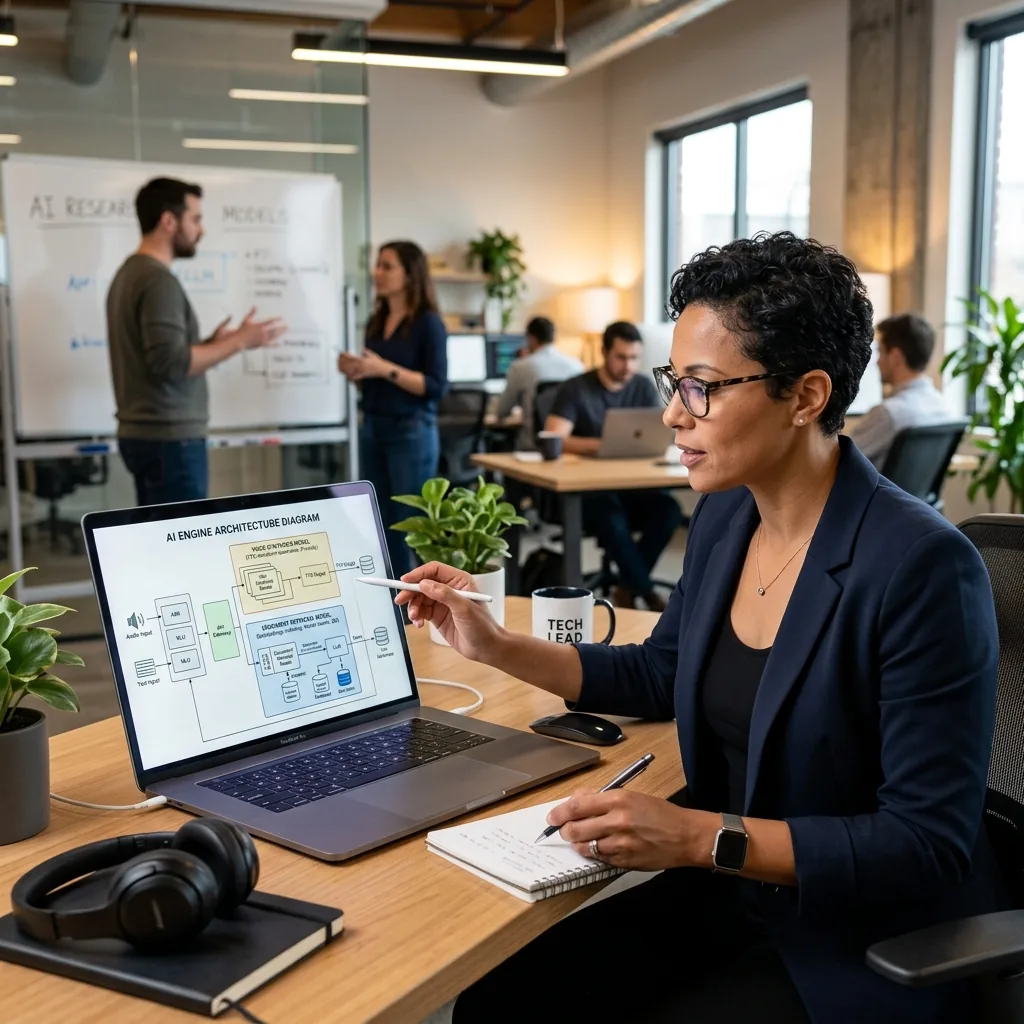
Hypsen combines four technical components: language models to understand and generate content, voice technology that responds in under a second and a half to allow real-time conversation, document retrieval that builds answers from the company's own files, and a per-learner state model that records their level in each competency. Assessment is built on behavioral interview frameworks: behaviorally anchored ratings, situational judgment, and the STAR format.
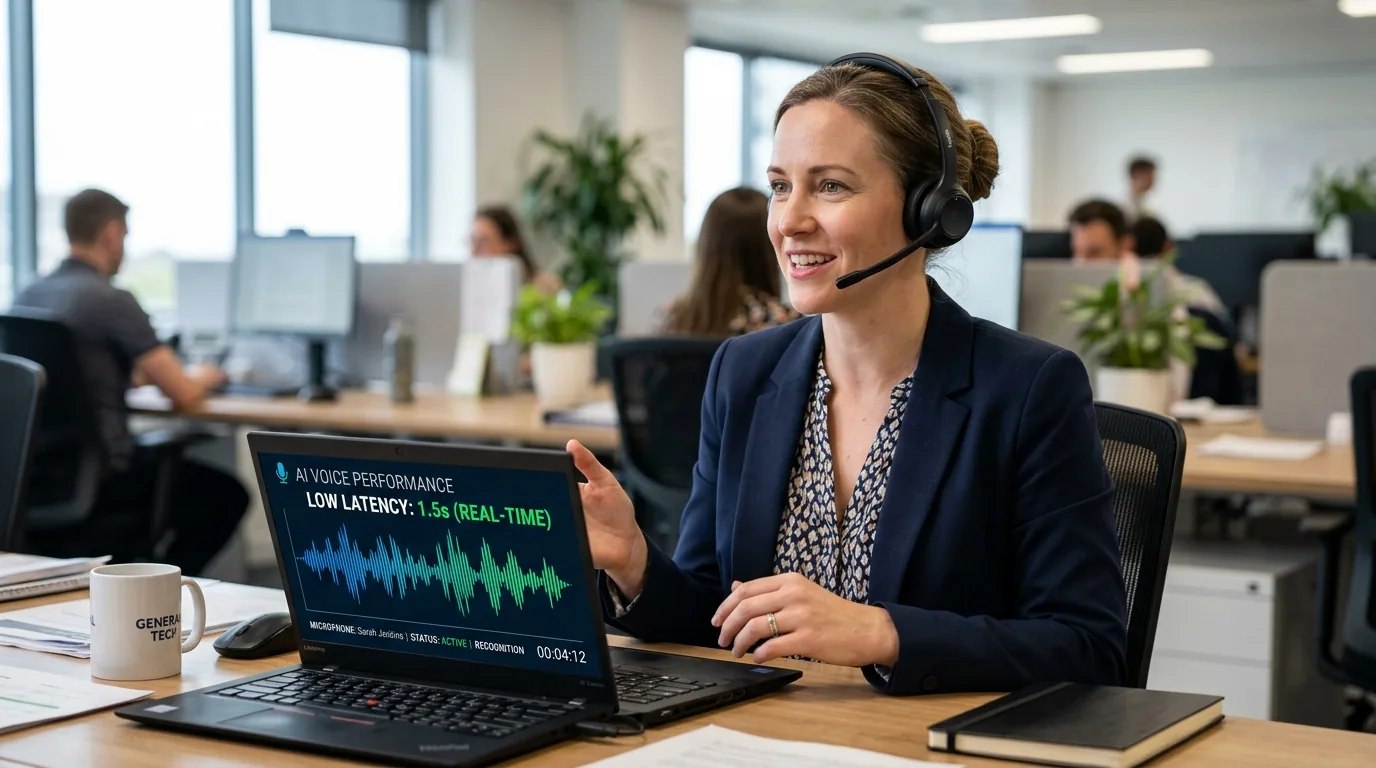
Under a second and a half
The difference between a class and a playback is response time.
Hypsen's tutor answers in under 1.5 seconds. That allows a conversation at the pace of a real one: the employee interrupts mid-explanation, asks, hears the answer, and the class continues where it was.
Above that threshold the conversation breaks. And when it breaks, people stop asking — which is exactly what you were trying to enable.
⚡ HYBRID ARCHITECTURE:
The linear part of the lesson is delivered in an optimized stream, and the real-time interactive session opens only when the learner raises their hand. That makes it possible to support many simultaneous learners without paying the cost of a permanent interactive session for each one.

Why the tutor doesn't make things up
A general-purpose assistant answers from what it holds in its parameters. For an operation with proprietary products, prices and procedures, that's worse than not answering: a plausible but incorrect answer about what a service includes becomes a promise the company then has to honor.
Hypsen uses document retrieval. For each question, the system searches the index built from the company's documents, retrieves the relevant passages, and generates the answer from them.
When something isn't in your material, the tutor draws on reliable sources rather than improvising. Your documentation always takes priority: if your policy says something, that's what it answers.
🔒 ISOLATED SPACE PER COMPANY:
One customer's content never feeds another customer's answers or contaminates organization data.
Why the second lesson isn't the same as the first
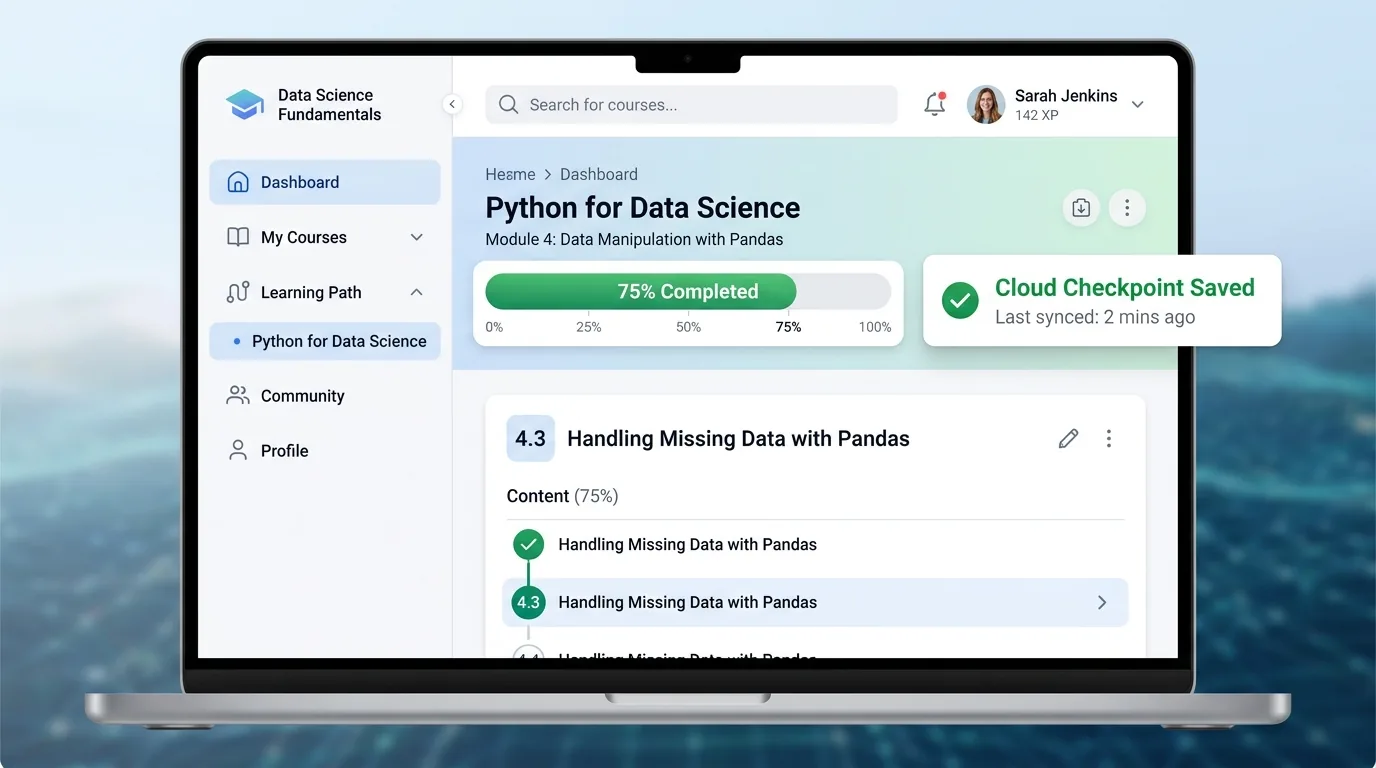
Hypsen maintains a state per employee: which competencies were assessed, what level each landed at, which modules were completed, what they asked the tutor, and how they did on each assessment.


💡 SEPARATED MEMORIES:
The company's knowledge catalog, the document material, the learner's state and the business state are kept separate. That prevents one learner's information from contaminating course content, or one company's material from surfacing in another's.
From document to class
From the uploaded files, Hypsen builds the syllabus, the script for each lesson, the slides and the visual support — including diagrams, infographics and illustrations generated to explain the content. Reference videos are embedded in the slide where they apply.
Everything is editable, by hand or by requesting the change in plain language. And the syllabus is approved before anything is generated.
🔄 AUTOMATED UPDATES:
When a new version of a source document is uploaded, the system identifies which modules relied on the changed content and rebuilds them — including in courses already published and in use — flagging whoever needs to retake what changed.