
Hypsen vs external trainer
A good trainer does things no platform does. The problem isn't their quality: it's that they charge by the day, handle one group at a time, and your people turn over all year.

What is the difference between Hypsen and an external trainer?
An external trainer charges by the day or by the session and handles one group at a time, which means cost scales with headcount and with turnover frequency. Hypsen delivers and assesses continuously across the whole workforce for a fixed monthly fee, with no additional cost per person. The trainer remains superior at group dynamics, reading the room and working on attitude; most companies end up combining both.
Let's start here, because it's real
An experienced in-person trainer brings irreplaceable human value:
- • Reads the room: detects resistance to change and conflicts between departments.
- • Works on attitude: facilitates motivation and team alignment.
- • Builds cohesion: brings people together in interactive workshop dynamics.
- • Brings outside judgment: offers perspective and benchmarks across companies.
- • Responds to the unexpected: redirects sessions when unscripted cases arise.
👥 PRODUCT-MARKET HONESTY:
If your need falls into any of these five, hire the trainer. Hypsen doesn't replace it.

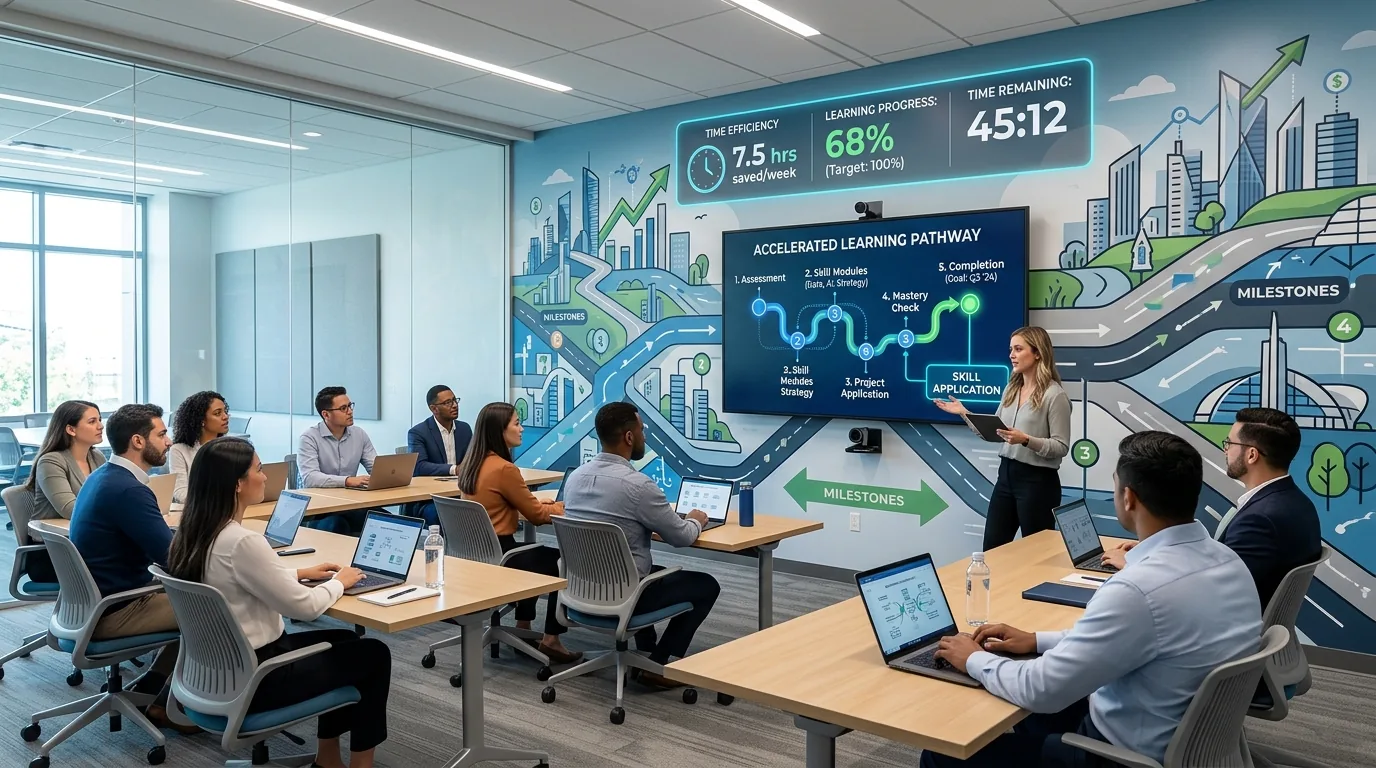
The trainer doesn't fail on quality. It fails on arithmetic.
- • Charges by the day and handles one group: cost multiplies by the number of groups.
- • People join all year: whoever joins in May misses the workshop until the next session.
- • Pulls people off the floor: uncounted off-duty hours that usually exceed the trainer's fee.
- • Can't personalize: must teach to the average instead of individual gap levels.
- • No live availability: when real questions arise with customers, the trainer has already left.
🧮 SCALE ARITHMETIC:
The true cost of an in-person workshop is multiplying groups by turnover and adding unworked operational hours.
What each one covers
How to actually compare cost
The most common error is comparing the trainer's fee against the platform's monthly price. They aren't comparable, because they cover different numbers of people over different periods.
🧮 TRAINER COST FORMULA:
+ (operating hours lost × employee hourly cost × people)
+ additional sessions due to turnover
The second line is almost never calculated and is usually larger than the first.
For Hypsen: the monthly fee, regardless of how many people use it or how many times new people join. Divide total annual cost by people effectively covered to get the true comparable figure.
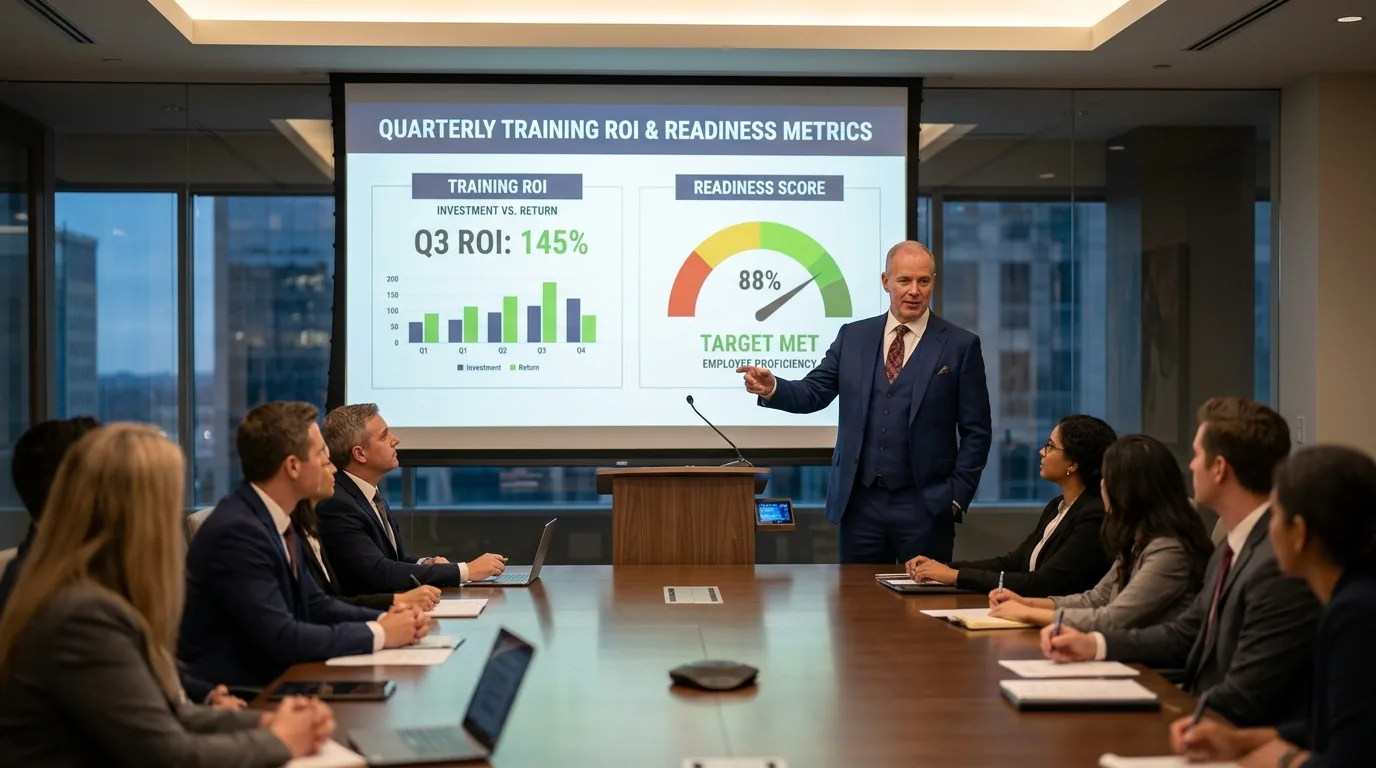
What most companies that solve this well actually do
It isn't choosing. It's dividing according to what each one does better:
The trainer is reserved for what only a person can do: leadership sessions, team alignment, change management, organizational diagnosis, work with middle management.
Hypsen absorbs the repetitive and the continuous: product, procedures, scripts, policies, conversation practice, onboarding for every person who joins.
The effect on the trainer is counterintuitive: they stop spending their days repeating the same induction workshop four times a year and spend them on higher-value work. Their day rate doesn't drop; their usefulness to the client goes up.
🤝 MODEL FOR CONSULTANTS & FIRMS:
Independent consultants and training firms use Hypsen as a delivery platform, keep the client relationship and service margin, and multiply the accounts they serve.


Cases where the trainer is the answer
- • Attitude and climate: the problem is attitude, motivation or climate, not knowledge.
- • Leadership alignment: you need to align a leadership group on a difficult decision.
- • Conflict facilitation: there's a conflict between departments that requires facilitation.
- • Small, senior teams: the group is small, stable and senior.
- • Team cohesion: team cohesion is the goal in itself.
📌 DECISION CRITERIA:
In all of these, training isn't the problem and a platform doesn't solve it.