From your manuals to a complete course,
without recording anything
You upload what your company already has written. The platform proposes the syllabus, you approve it, and it generates the slides, the assessments and the simulations.

How AI Course Generation Works
Hypsen builds training programs from material the company already has: documents in various formats, website links and videos. The platform proposes a syllabus the instructor approves or adjusts before generating, then produces the slides, images, per-topic quizzes and final assessment. The course is built on the company's documents, so it teaches their procedures rather than generic best practice.
The knowledge already exists. Turning it into training is what costs.
Your company has manuals, policies, scripts and procedures. They're written, they're approved, and they describe exactly how the work gets done.
What doesn't exist is the bridge between that material and training somebody can actually take. Building it requires instructional design, writing, slide layout and — if you want video — production.
That's why most companies end up at one of two extremes: buying a catalog course that doesn't speak to their operation, or handing out the PDF and hoping someone reads it.
How a program gets built
Course language — Spanish, English, German, French, Italian or Portuguese —, visual theme, assigned tutor, learning objectives, and the role it's aimed at.
You decide what the course is built from.
- • Documents in various formats: PDF, Word, Excel and others
- • Website links
- • YouTube videos
If you don't have in-house material for a given topic, the platform can source reference content from the internet. And once the base is chosen, you decide what extra material to add as support.
The platform proposes the topics. The instructor activates, deactivates, edits each topic, adjusts the number of slides and approves before anything is generated.
Per-topic quizzes — multiple choice, open-ended or mixed — and a final assessment of your choosing: written exam, AI voice interview, or real-situation simulation.
Slides, images, embedded reference videos and speaker notes. All editable afterward: a single slide or the whole deck, by hand or by requesting the change in plain language.
Three levels of graphic density
Adapt the visual presentation of slides to the pedagogical goal of the content.
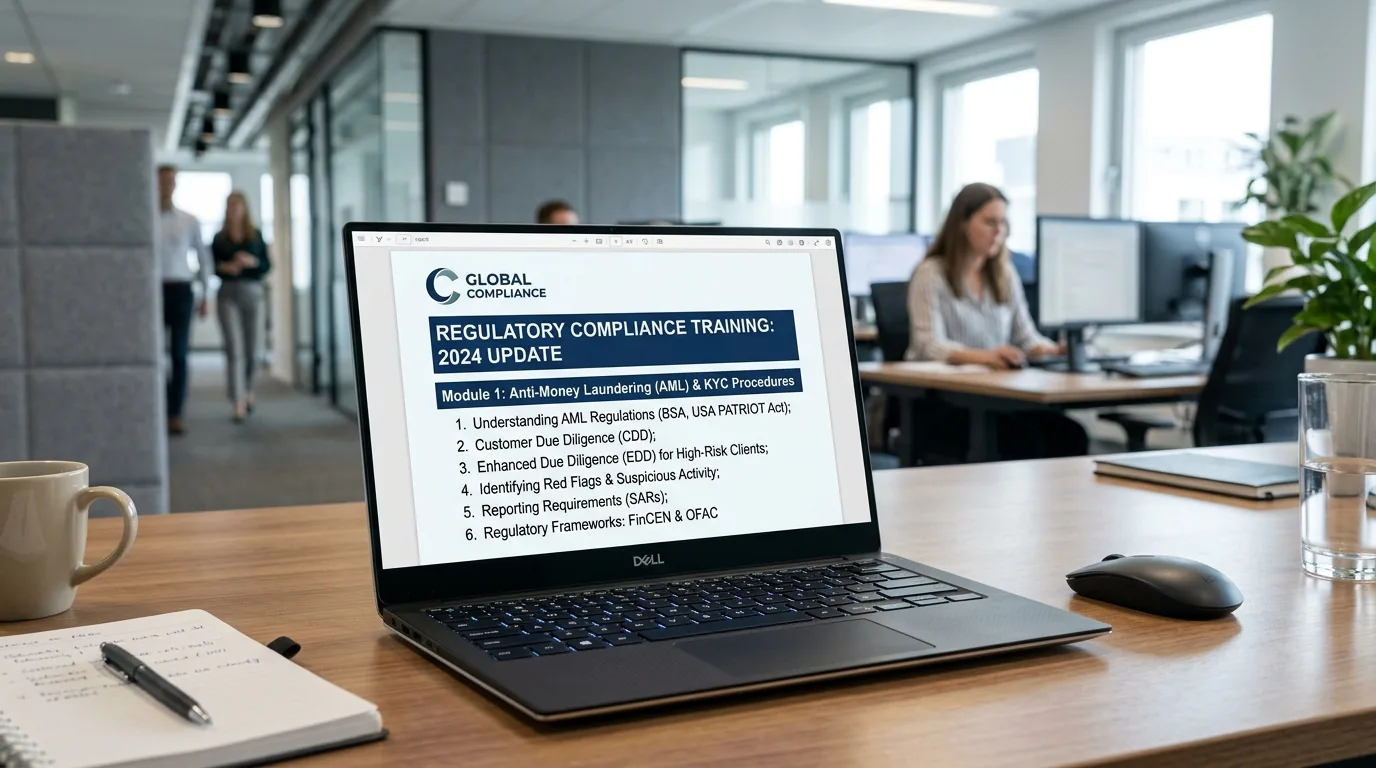
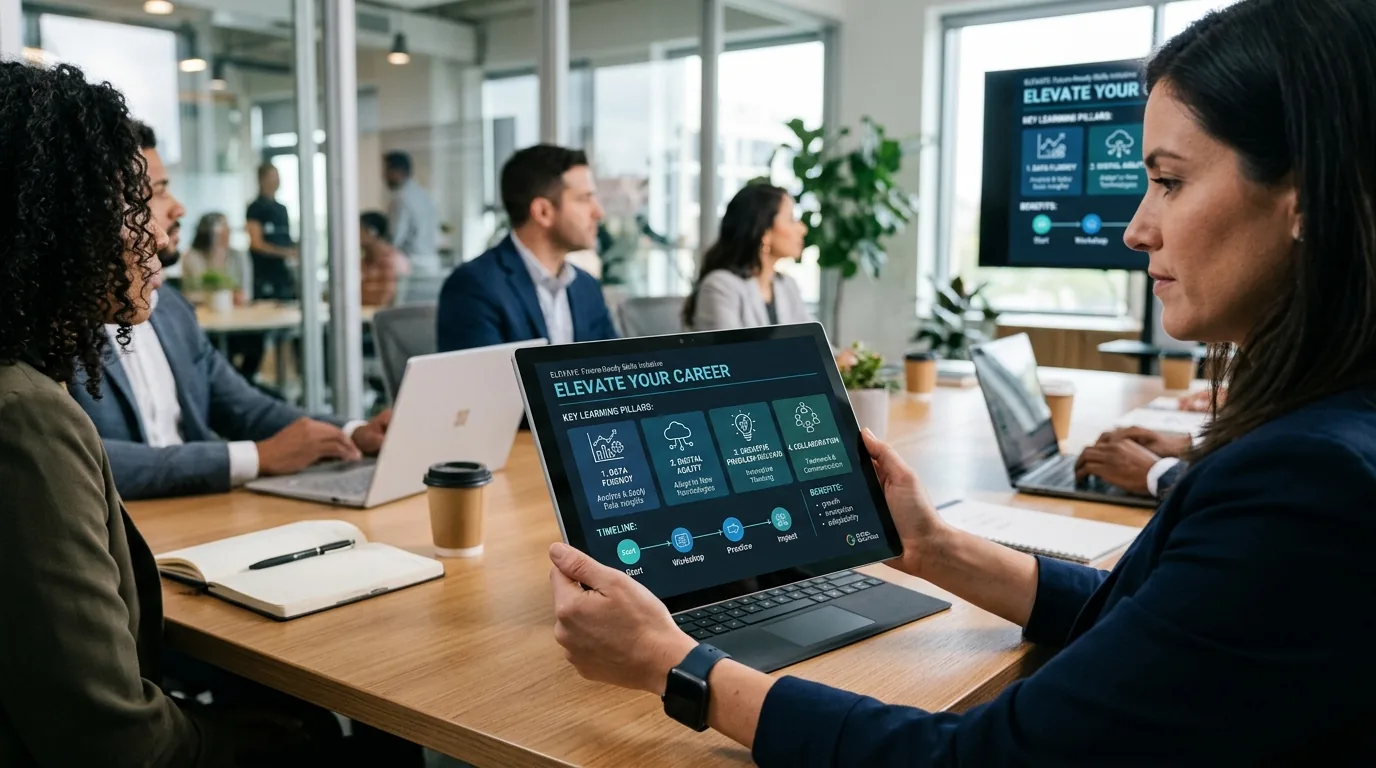
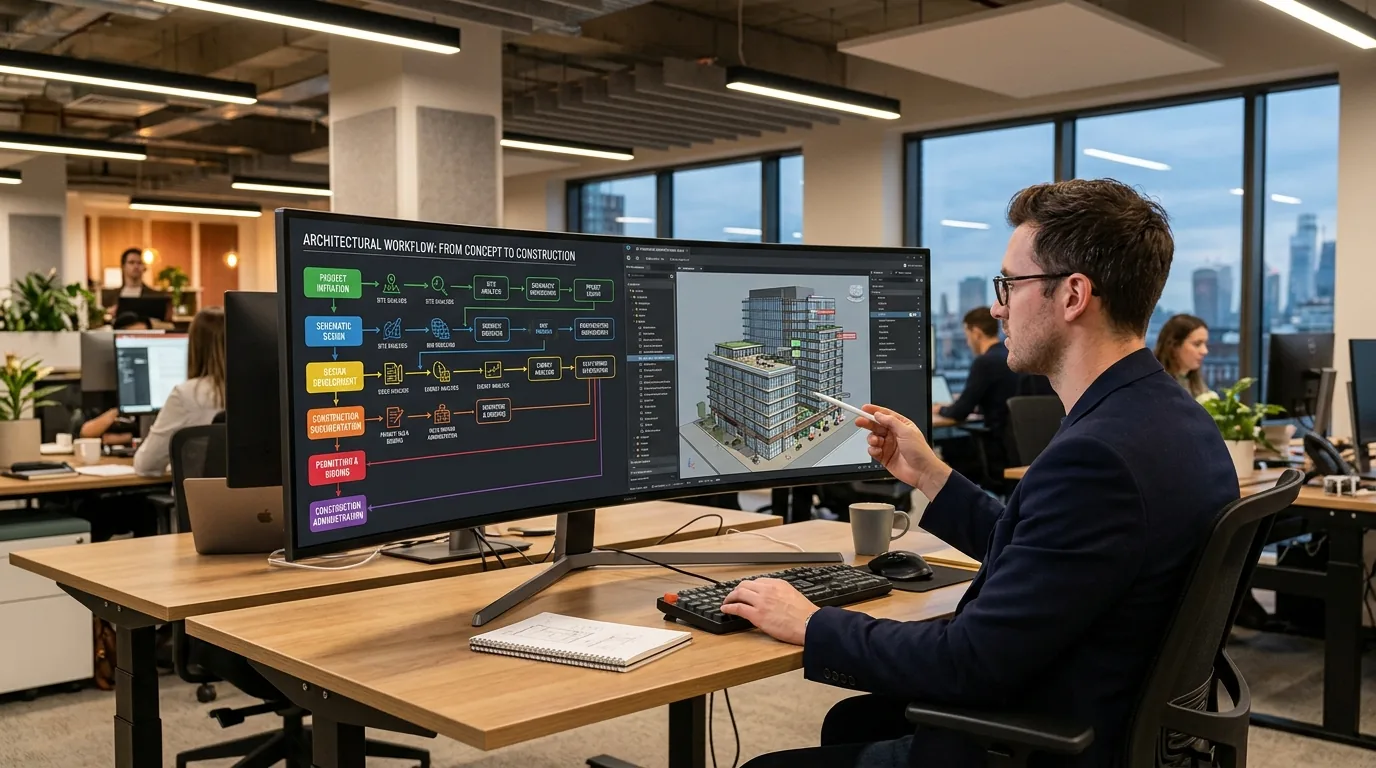
And within the course, each slide decides what it needs: an illustration, a diagram, an infographic, a chart, or a reference video drawn from your own sources.
No leaving the platform
When a source is a video, it's embedded in the corresponding slide so it can be watched during the presentation, at the point in the syllabus where it makes sense.
The employee doesn't receive a list of links to watch separately. They watch the video inside the class, and the tutor stays available to answer questions about what they just saw.

A generic course can contradict your operation
The course is built on what you uploaded, not on textbook best practice.
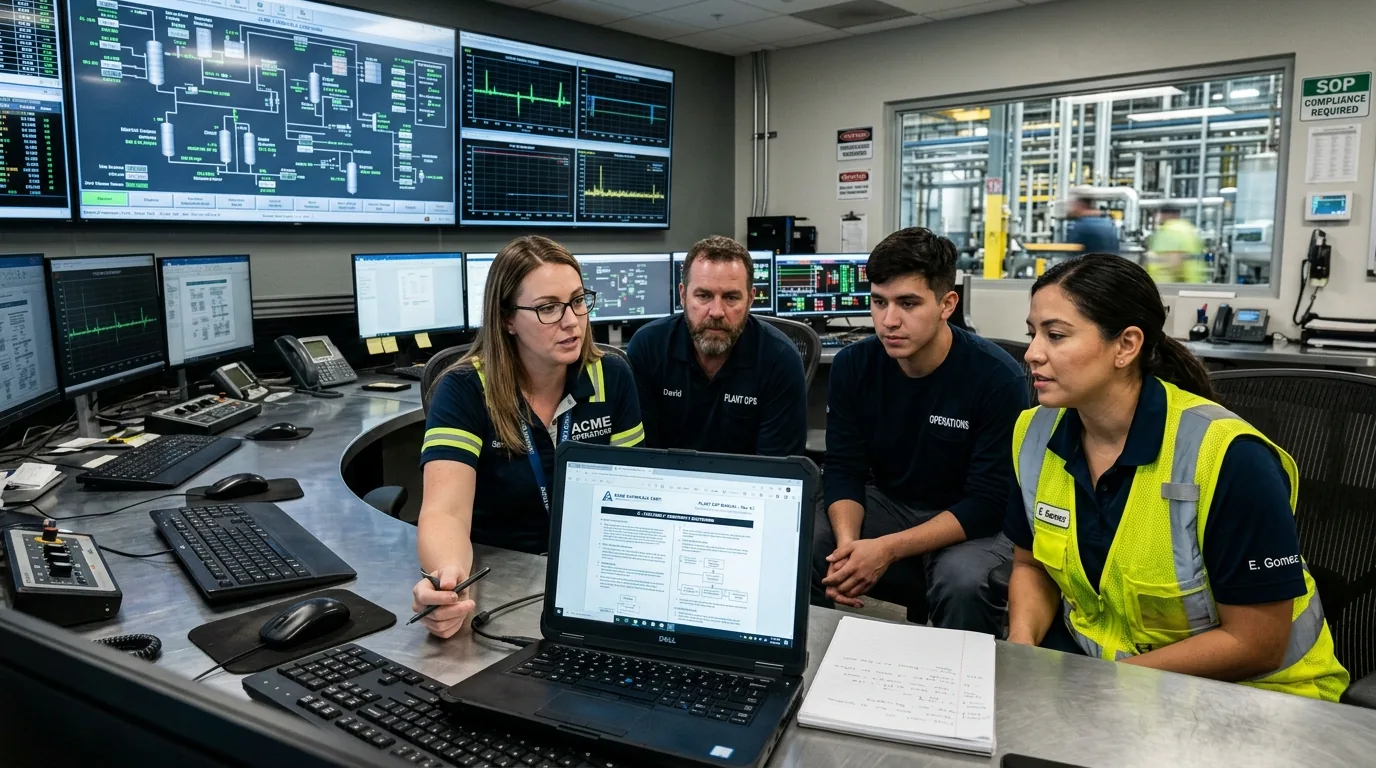
That matters when your procedures, prices or policies are your own. A generic sales course can teach a technique your company doesn't allow. A generic safety manual can omit the specific restriction on your plant floor.
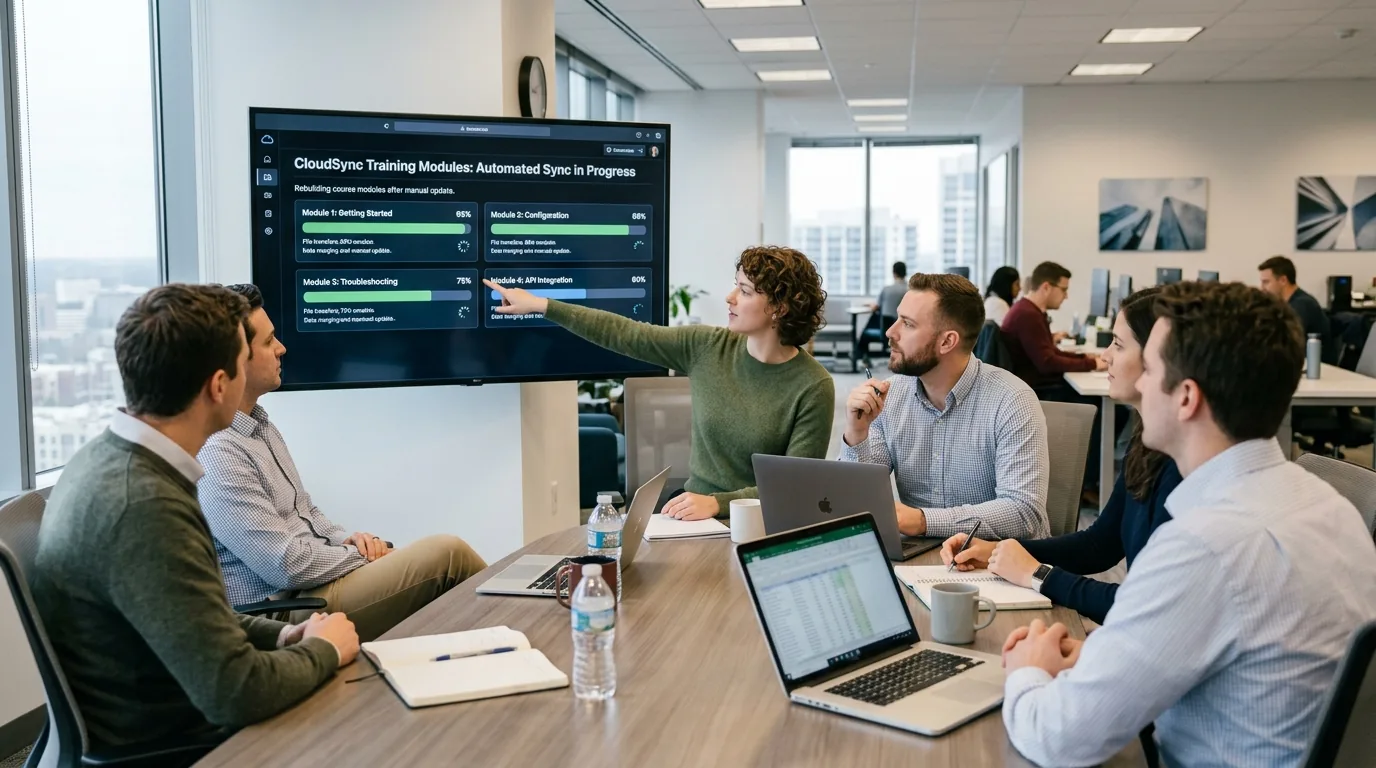
When a manual changes, the course changes
Keep your workforce trained on the current policy, not the one from six months ago.