Three ways to prove it.
None of them is multiple choice.
A quiz confirms they read it. A voice interview confirms they understood it. A simulation confirms they can do it.

How AI Assessment & Role-Play Work
Hypsen assesses at two moments: quizzes at the close of each topic, and a final assessment that can be a written exam, an AI voice interview, or a simulation of a real work situation. The voice interview and the simulation use the STAR methodology: they ask the person to resolve a concrete case by describing the situation, the task, the action and the result. At the end, the employee receives feedback on what was missing, not just a score.
Watch AI Assessment & Voice Role-Play in Action
See how the AI simulates real-world client scenarios with dynamic objections, evaluates spoken interactions, and delivers structured STAR feedback.
A written exam doesn't predict what happens at the door
An employee can recite the seven steps of the sales process, pass the exam with a high score, and go silent when a customer says they already have service with a competitor.
Recognizing the right answer among four options, shortly after seeing it, is one capability. Producing it out loud, in front of someone who interrupts and doesn't cooperate, is a different one.
"The customer at the door doesn't ask multiple-choice questions. They raise objections, interrupt, and are in a hurry."

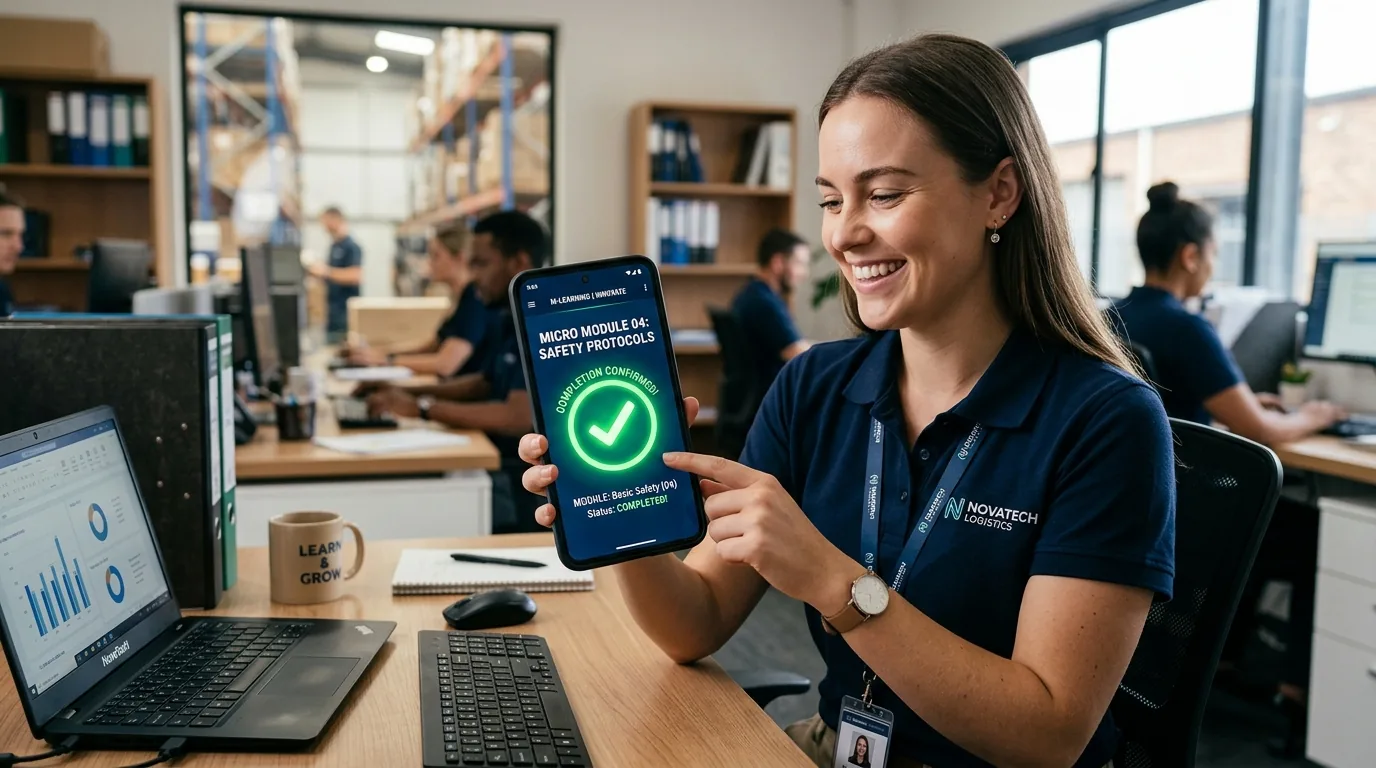
Confirm before moving on
At the close of each topic: multiple choice, open-ended or mixed, depending on configuration.
It isn't the assessment that decides whether someone is ready. It's the progress check that prevents a person from stacking topics on a foundation that never set.
Explaining in your own words
Interview format: the AI asks and the employee answers out loud. There are no options to recognize and no time to draft.
The questions ask for a concrete case, not a definition. Instead of "what is objection handling?", the question is "tell me about a time a customer raised a difficult objection: what happened, what did you need to achieve, what did you do, and how did it end?"
The standard in behavioral interviewing. It's far harder to answer from memory than a definition, because it requires having lived and understood the situation.

Practicing the difficult conversation before having it
The employee talks with an AI character and has to resolve a work situation.
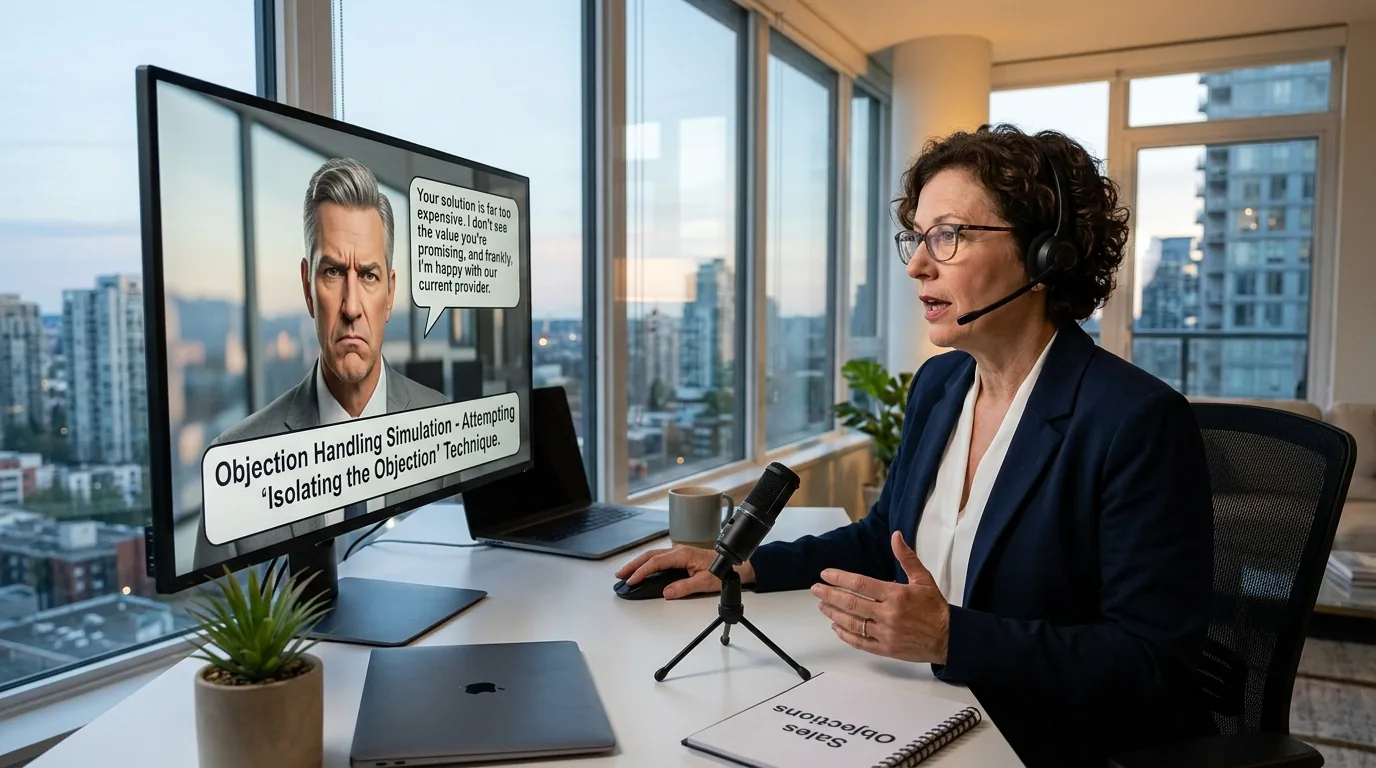
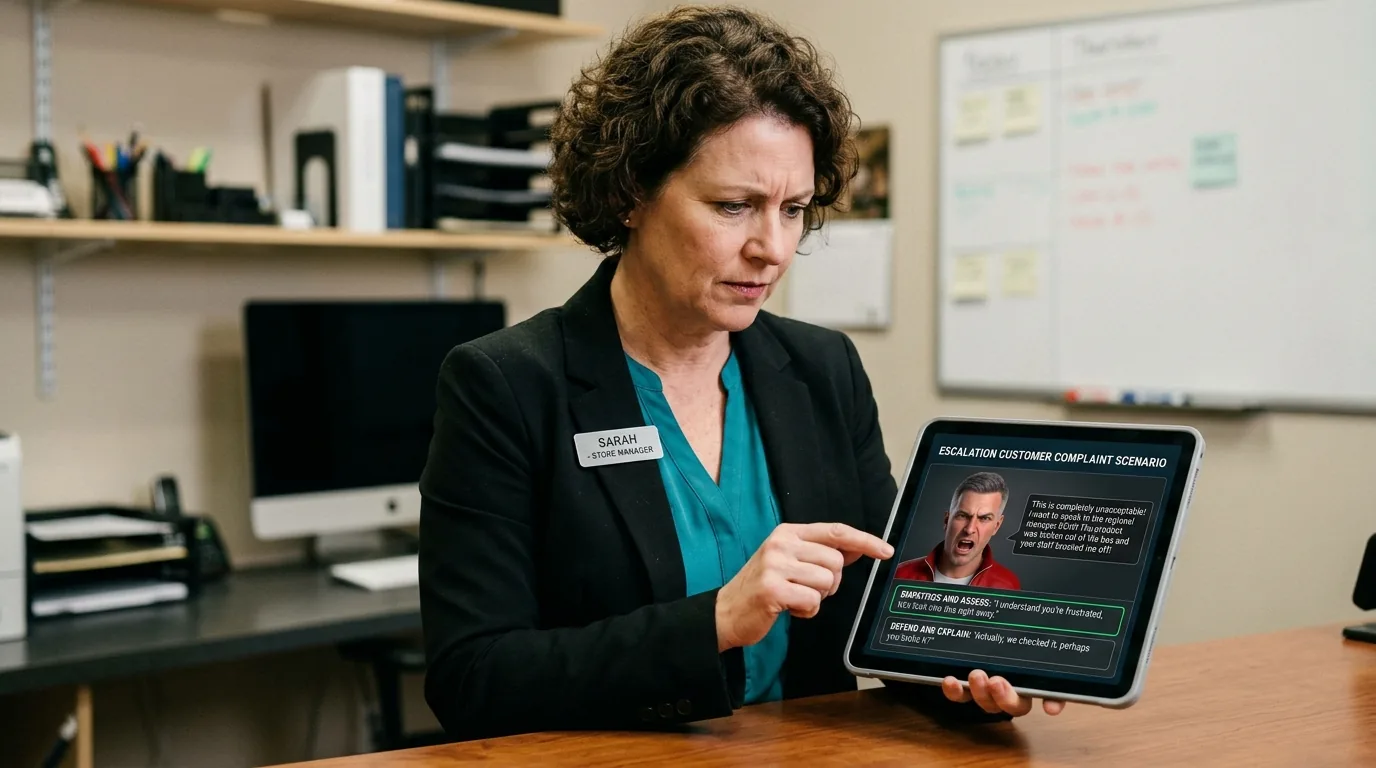

Not a number: what was missing
"You listened well and paraphrased the objection. But you said the package included something it doesn't, and after answering the objection you never returned to the close — the conversation ended there."
The second one tells them exactly what to practice. The first tells them nothing — which is why generic feedback never changes anyone's performance.