
Manufacturing Onboarding: Safety, Process, and the Machine Operator Who Can Work Alone
"Why safety must be certified separately from the rest of the process, and what it truly means for an operator to work solo without supervision."
A manufacturing plant urgently needs to fill an operator opening and decides that two weeks of general shadowing are enough before letting them run equipment alone. The operator produces well, hits cycle times, and looks completely ready on paper. A month later, in a situation that wasn't covered in depth during training, they skip a safety procedure step and suffer an entirely preventable incident. The problem wasn't that the operator failed to learn the general job — it was that safety was never certified as its own standalone milestone, independent of how fast they produced.
This article applies the framework from 30-day onboarding for high-turnover operations to manufacturing, where the cost of incomplete onboarding isn't just poor customer service — it is, potentially, an accident.
Why manufacturing is different: the risk is not just poor service
In retail or dining, an unready employee makes a recoverable mistake — a mischarge or a wrong dish. In a manufacturing plant, an unready operator working around heavy machinery can injure themselves or a coworker. That magnitude of consequence fundamentally changes how onboarding must be designed: safety cannot be treated as just another bullet point within general training — it must be evaluated separately, with its own uncompromising threshold.
Why safety must be certified separately from the rest of the process
This connects directly to the concept of blocking criteria explained in criterion-based rubrics vs averages: there are criteria where failure has consequences that no other strength can balance out. Industrial safety is the textbook example. An operator can produce at exceptional speed, follow all other steps cleanly, and still be dangerous if they haven't mastered a critical lockout/tagout procedure. Averaging everything into one overall score hides critical safety gaps behind strong production numbers until it is too late.
The practical rule: safety certification is evaluated and signed off entirely separate from the standard workflow, and no amount of production speed compensates for a safety deficiency.
The operator "can work alone": what that actually means
The phrase "ready to work solo" sounds simple, but in practice it represents three distinct levels of capability:
Safety. The operator is certified in machine-specific safety protocols, verified independently rather than assumed through tenure.
Process and quality. The operator follows the standard operating procedure consistently, not just producing at quota. A fast operator who skips steps is taking shortcuts that usually become visible only when quality fails or equipment jams.
Operational autonomy. The operator resolves minor operational variances independently (routine adjustments, minor tolerances) while knowing exactly when a situation must be escalated to a supervisor — especially anything touching safety.
This connects to how to build a performance evidence system for your team: each of these three levels requires observable criteria and independent documentation, not a vague training sign-off sheet.
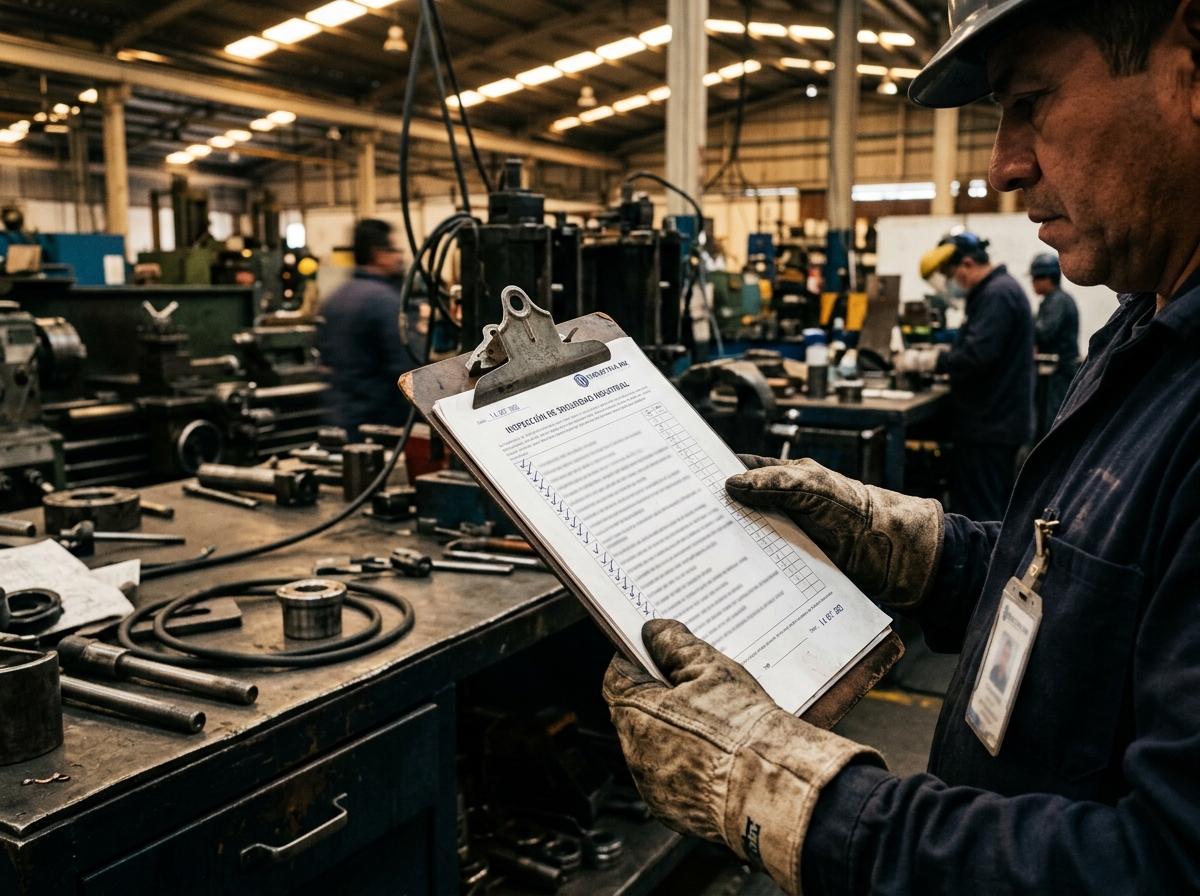
Structuring onboarding in three gated phases
Phase 1 — Safety Certification (Mandatory Gate). Nobody advances to live equipment without passing this standalone practical evaluation.
Phase 2 — Supervised Workflow. With safety certified, the operator practices the standard procedure under close supervision, focusing on procedural adherence over raw speed.
Phase 3 — Verified Autonomy. The operator begins running solo with reduced oversight, audited on their judgment of when to self-adjust and when to stop and escalate.
What the three phases look like in practice
For an industrial cutting machine operator: Phase 1 certifies lockout/tagout, PPE compliance, and emergency stop response via a practical test. Phase 2 shadows standard cutting procedures for two weeks, correcting improper workarounds even if parts look acceptable. Phase 3 verifies they can align parts independently but immediately stop the machine and notify supervisors if a safety sensor triggers unexpectedly.
Frequently Asked Questions
Why must safety be certified separately in manufacturing?
Because safety is a blocking criterion: failure carries severe physical consequences that no production volume can compensate for. Blending safety into general scoring hides dangerous gaps.
What does it truly mean when an operator can work alone?
They meet three verifiable thresholds: certified in safety protocols, consistently compliant with standard procedures, and capable of autonomous minor adjustments with clear escalation judgment.
What are the three gated phases of manufacturing onboarding?
Phase 1 mandatory safety gate, Phase 2 supervised workflow execution, and Phase 3 verified autonomy with escalation criteria.
Is an operator ready if they produce fast but skip procedural steps?
No. Speed without procedural adherence is a major risk factor for quality defects and safety incidents.
In summary
In manufacturing, readiness isn't a single vague score — it is three sequential levels, starting with non-negotiable safety. Certifying safety as a standalone blocking gate ensures high production numbers never mask dangerous procedural blindspots.
To adapt this framework to your plant floor, the **30-day onboarding map** provides the customizable structure for safety, workflow, and autonomy gates.
And to objectively verify operator understanding of critical safety protocols, at Hypsen that is exactly the validation we provide.
30-Day Onboarding Map for Manufacturing & Plant Operations
Download the structured framework to certify safety, workflow compliance, and operational autonomy.
Verify if your operators master safety protocols before releasing them to the floor
Hypsen validates voice-based comprehension of critical safety protocols and standard procedures in minutes.